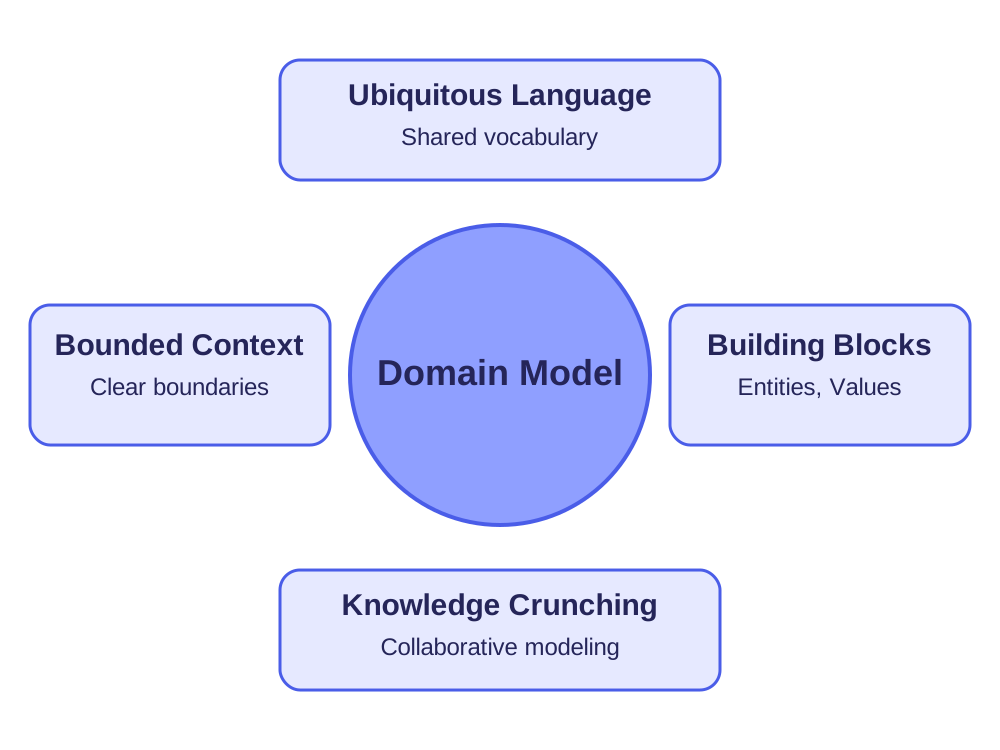
Embracing Domain-Driven Design: A Deep Dive into Core Concepts
🧠 Domain-Driven Design (DDD) means modeling systems using the language of the business. It requires tight collaboration between developers and domain experts so the software directly reflects how the business operates.
🧭 Strategic vs Tactical Design Tools
DDD talks about two kinds of design tools:
- Strategic Design Tools
- Tactical Design Tools
🧠 Strategic Design
Strategic design maps how different parts of the domain connect and where boundaries should be drawn.
It involves:
- Defining bounded contexts
- Identifying subdomains
- Establishing the relationships between different contexts
Key Concepts:
- Bounded Contexts
- Ubiquitous Language
- Context Mapping
🧩 Tactical Design
Tactical design dives into the details of each bounded context and defines the internal building blocks of the system.
It applies DDD patterns such as:
- Entity
- Aggregate
- Value Object
- Domain Event
- Repository
- Factory
🔑 Key Concepts of Domain-Driven Design
📌 Domain
The subject area that the software is intended to address.
Example, E-Commerce system
📌 Subdomain
A part of the domain that can be isolated and worked on separately.
Example, ProductManagement, OrderManagement, CustomerManagement
📌 Bounded Context
A boundary within which a particular model is defined and applicable.
Example:
- Product Management Context, Adding, updating, removing products
- Order Management Context, Creating/updating orders
📌 Ubiquitous Language
A common language used by both developers and domain experts.
Example, Product, Cart, Order, Customer
📌 Context Mapping
Identifies relationships and interactions between bounded contexts.
Example, Product and Order Context collaboration for stock validation
🧱 Tactical Building Blocks
🧍 Entity
An object with a unique identity and lifecycle.
Example, Customer
🏗️ Aggregate
A cluster of domain objects treated as a single unit.
Example, Order with many OrderLineItems
🧾 Value Object
Represents a descriptive aspect with no identity.
Example, Address, Money
📢 Domain Event
A record of a significant change in the domain.
Example, OrderPlacedEvent, ProductAddedToCartEvent
🗃️ Repository
Stores, retrieves, and manages domain objects.
Example, ProductRepository, OrderRepository
🏭 Factory
Encapsulates object creation logic.
Example, OrderFactory builds order aggregates from cart
✅ Benefits of Domain-Driven Design
- Improved Communication: Ubiquitous language bridges devs and domain experts
- Focus on Core Complexities: Helps build a more maintainable system
⚠️ Challenges of Domain-Driven Design
- Complexity: Especially in large, evolving domains
- Overkill for Simple Domains: Not always suitable for straightforward business logic