The books we hand to engineers who want to think clearer, lead better, and stay grounded. We add one at a time, and tell you exactly what each one gives you.
Mind & Meaning
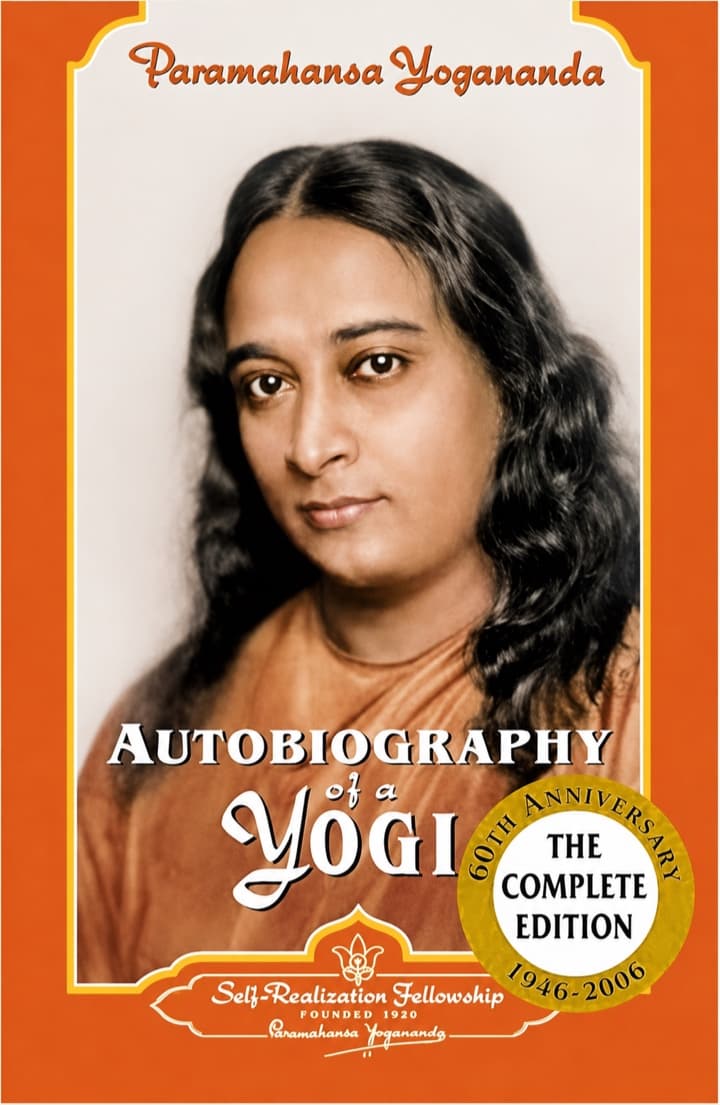
Autobiography of a Yogi
by Paramahansa Yogananda
The book that carried meditation and the inner life into the modern world.
Yogananda's own life story, from a restless boy chasing meaning to the teacher who brought Kriya Yoga and the science of meditation to the West. Along the way he meets saints, skeptics, and Nobel scientists, and treats the inner world with the same seriousness a good engineer gives a hard system.
MeditationFocusPerspectiveSelf-realization
“The season of failure is the best time for sowing the seeds of success.”
Meditation is shown as something you practice and get measurably better at, not a mood you wait for. The same single-pointed focus is what powers real deep work.
02
Measure a life by depth, not title
A quiet argument against chasing the next level for its own sake, and for building a life you would still respect with the noise turned off.
03
Stay centered under uncertainty
How to hold steady when the outcome is not in your hands. Useful the night before a big interview, or in the middle of an incident.
04
Curiosity across worlds
It refuses the split between rigorous science and first-person experience, and shows a mind comfortable holding both at once.
Why an engineer should read it
Engineering rewards long hours and the next promotion, and quietly bills you for it in attention and calm. This is the counterweight. Steve Jobs kept it on his iPad and re-read it every year, and copies were handed to guests at his memorial. Read it for the faculties it trains, focus, stillness, and perspective, which happen to be the same ones that make you sharper at the desk.
Mind & Meaning
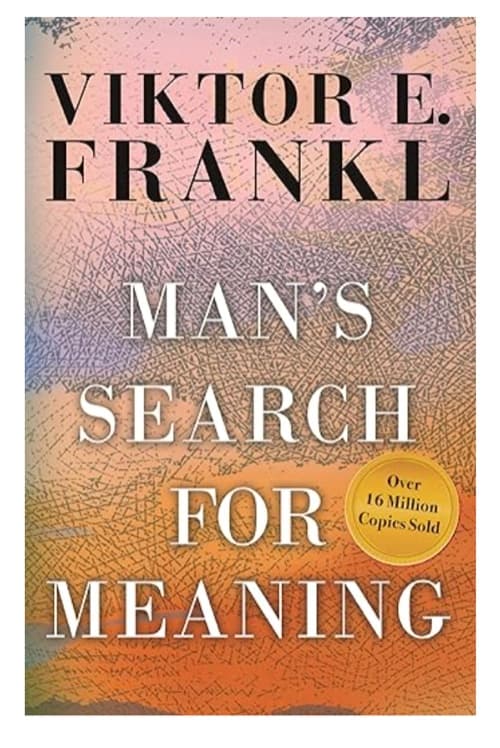
Man's Search for Meaning
by Viktor E. Frankl
The one freedom no one can take from you is how you choose to respond.
A psychiatrist's account of surviving the Nazi camps, and the idea he built from it: the deepest human drive is not pleasure or success but meaning. Frankl argues that when everything is stripped away, one freedom remains, the choice of your own response, and that a strong enough why lets a person endure almost any how.
ResiliencePurposePerspectiveBurnout
“When we are no longer able to change a situation, we are challenged to change ourselves.”
Circumstances are often out of your hands; your reaction never is. The steadying thought before a hard interview, a layoff, or a 3am outage you didn't cause.
02
A why makes the how bearable
Meaning, not comfort, is what carries people through hard stretches. The real antidote to burnout and the 'next promotion then I'll be happy' treadmill.
03
Meaning is found, not given
It shows up in your work, in the people you care about, and in how you face what you can't change, never in waiting for motivation to arrive.
04
Purpose beats pleasure as a compass
Chasing happiness directly tends to miss; it arrives as a side effect of pursuing something that matters. A quiet correction for a career optimized only for the next level.
Why an engineer should read it
Engineering can quietly become a treadmill of the next ticket, the next level, the next launch, and it bills you in meaning when the wins stop landing. This short, unforgettable book is the counterweight: it re-anchors you to why the work matters, which is exactly what keeps you steady and sane over a long career. One of the most-loved nonfiction books ever written, and it reads in an afternoon.
Craft & Focus
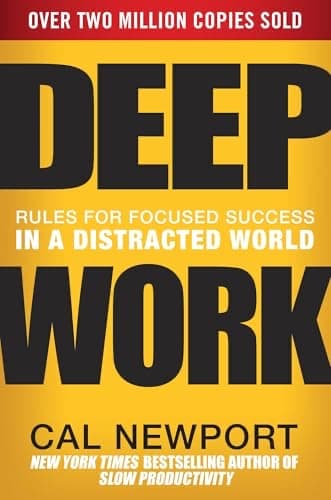
Deep Work
by Cal Newport
The ability to focus without distraction is becoming rare, and more valuable, at the same time.
Newport makes the case that the most valuable skill in a distracted economy is sustained, undistracted concentration on hard problems, and that it is a trainable habit, not a personality trait. The book is half argument (why deep work compounds into rare expertise) and half method (concrete routines to protect and lengthen your focus).
FocusProductivityCraftAttention
“Clarity about what matters provides clarity about what does not.”
Hours of fragmented, notification-driven work rarely add up to anything hard. The wins that move a career come from long uninterrupted blocks.
02
Focus is a trainable muscle
Concentration erodes when you feed it constant novelty. Deliberately practicing boredom and single-tasking rebuilds the capacity for hard thinking.
03
Schedule depth, don't hope for it
Deep work happens by design (blocked calendar, rituals, hard boundaries), never by waiting for a quiet moment that never comes.
04
Quit the shallow on purpose
Most 'busy' activity is low value. Cutting it, and the tools that feed it, is what frees the hours real work needs.
Why an engineer should read it
This is the most directly career-useful book on the shelf. The work that gets engineers promoted, designing the hard system, mastering a new domain, shipping the thing nobody else could, all requires the sustained focus this book teaches you to protect. It is the practical counterpart to the inner-life books here: they keep you grounded, this makes you produce.
Clear Thinking
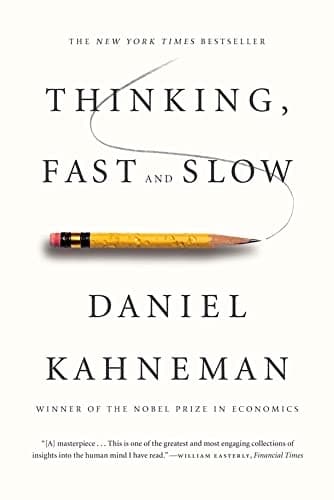
Thinking, Fast and Slow
by Daniel Kahneman
A field guide to the ways your own mind quietly fools you.
A Nobel laureate's summary of a career studying how people actually think. Kahneman splits the mind into a fast, intuitive System 1 and a slow, effortful System 2, then shows, with experiment after experiment, the predictable errors the fast system makes, and when to distrust your gut and slow down.
JudgmentBiasDecisionsReasoning
“Nothing in life is as important as you think it is while you are thinking about it.”
The fast, confident answer is often wrong in systematic ways. Knowing the failure patterns is the first defense against them.
02
Confidence is not accuracy
How sure you feel is a poor guide to how right you are. A humbling, useful correction for design reviews and estimates.
03
Anchors and framing steer you
The first number you hear and the way a choice is worded quietly bend your judgment. Spotting it is half of resisting it.
04
Slow down for the calls that matter
Not every decision deserves effort, but the high-stakes ones do. The skill is knowing when to switch from gut to deliberate reasoning.
Why an engineer should read it
Engineering is a stream of judgment calls, estimates, trade-offs, incident diagnoses, hiring, design bets, made under uncertainty and time pressure, exactly the conditions where the mind's biases bite hardest. This book gives you the vocabulary and the humility to catch your own bad calls before they ship. It reads slower than the others here, and it's worth every page.
More picks are on the way. Have one that changed how you work? Tell us.